Showing posts with label Civil War. Show all posts

Monday, February 23, 2015

A wonderful sentence from Shelby Foote

"Steedman, who was 47, Pennsylvania born, a former printer, Texas revolutionist, and Ohio legislator, a great hearty man, broad breasted and broad shouldered, whose face, according to an admirer, was written all over with sturdy sense and stout courage, brought them up on the double and committed them with no more delay other than it took to tell a staff officer to see that his name was spelled correctly in the obituaries."

A single sentence.

The deliberate and slow manner of Foote's writing is wonderful. Here, he's describing a particular point in the Battle of Chickamauga, where Steedman essentially rallies the Federal troops in a valiant counter-attack.

Sunday, December 21, 2014

The Fog of War

In the second volume of his history of the Civil War, Foote described the fog of war through an episcopal clergyman in New York described the many reports that came in about the Battle of Chancellorsville:
"It would seem that Hooker has beaten Lee and that Lee has beaten Hooker, that we have taken Fredericksburg, and that the rebels have taken it also, that we have 4,500 prisoners, and the rebels 5,400, that Hooker has cutoff Lee's retreat, and Lee has cutoff Sedgewick's retreat, and Sedgewick has cutoff everybody's retreat generally, but has retreated himself, although his retreat was cutoff.

In short, all is utter confusion. Everything seems to be everywhere, and everybody all over, and there is no giving it any truth."
Thus, the second attempt to capture Fredericksburg ended in a Federal defeat, albeit a dearly bought one.

Monday, December 15, 2014

I'll Shoot You Tomorrow

A quote from the passage I just read in Shelby Foote's second volume on the recent unpleasantness.
The ground in front of the sunken road, formerly carpeted blue, had taken on a mottled hue, with patches of startling white. Binoculars disclosed the cause. Many of the Federal dead had been stripped stark naked by shivering Confederates, who had crept out in the darkness to scavenge the warm clothes from the bodies of men who needed them no longer... No one assigned to one of the burial details ever forgot the horror of what he saw; for here, up-close and life-size, was an effective antidote to the long-range, miniature pageantry of Saturday's battle as it had been viewed from the opposing heights.

Up close, you heard the groans and smelled the blood... Not even amid such scenes as this, however, did the irrepressible rebel soldier's wry sense of honour desert him. One, about to remove a shoe from what he though was a Federal corpse, was surprised to see the 'corpse' lift its head and look at him reproachfully. "Beg pardon sir," the would-be scavenger said, carefully lowering the leg; "I thought you have gone above." Another butternut scarecrow, reprimanded by a Union officer for violating the terms of the truce by picking up a fine Belgian rifle that had been dropped between the lines, looked his critic up and down, pausing for a long stare at the polished boots the officer was wearing. "Never mind," he said dryly. "I'll shoot you tomorrow and git them boots."
This is Foote's description of the aftermath of Fredericksburg.

Friday, December 5, 2014

Our National Strife

I have just made it through Vol. I of Shelby Foote's Civil War - A Narrative, and it's absolutely captivating. Foote is a remarkable storyteller. I've always enjoyed history because, to me, good history just reads like a story, and most of the time the truth is more dramatic than fiction. Towards the end of the first volume (which is just about the winter of 1862), a passage struck me. 

Foote recounts a speech that Lincoln delivers to Congress in 1862, just as it had become clear to him (and others) that the Civil War was not going to be easily or quickly won.
Our national strife springs not from our permanent part, not from the land we inhabit, not from our national homestead. Our strife pertains to ourselves, to the passing generations of men, and it can without convulsion, be hushed forever with the passing of one generation.
                                                                                -Lincoln's Second Annual Address

To me, the idea that our national problems can be solved with a new generation  has an optimistic sound. Essentially, we may have troubles now, but the future generations of Americans can solve them simply by coming into existence. I guess it's a faith in the moral arc of the universe. The flip side to that coin is that it only takes one generation to lose what we presently have.

I guess the both are true. Anyway, it seemed particularly relevant to all of the national strife that we seem to have today.

Wednesday, November 5, 2014

Last Night's Election - The Devil's Own Day


Nikki Haley cruised to a fairly easy victory last night, as Republicans swept pretty much every race there was, in both South Carolina and nationwide. Even the state of Maryland elected a Republican Governor. Maryland, y'all.

Anyway, we'll see how things go for the next two years. My only admonition to Republicans in the Senate is this: All glory is fleeting. Remember the hubris of the Democrats, who basically thought the were going to have a permanent majority?

Well guess what, y'all. No majority is ever permanent. Get things done, and you'll be rewarded. Act like knuckle-heads, and you'll be out on your ear next time. Being marginally better than the Democrats isn't something to get all that excited about. There's always another battle to be fought.

I'm reminded of the exchange between Grant and Sherman at Shiloh. After the first day of battle, the Confederates had taken the Federal position and forced a retreat of the Federals under Grant and Sherman. The Federals had been driven from the field and looked like they would be finished off the following morning.
When Sherman arrived at Grant's headquarters later that evening, he found the general–broken sword and all– chewing on a soggy cigar in the rain, which had begun soaking the battlefield.

'Well, Grant' Sherman said to his friend, 'We've had the devil's own day, haven't we?'

'Yes,' replied Grant, 'lick 'em tomorrow, though.'
The GOP could easily be licked next time.

Tuesday, October 21, 2014

I've Started Shelby Foote's "Civil War"

Shelby Foote - Southern Man of Letters

Now that I've finished a biography of Douglas MacArthur, I've decided to take the plunge into Shelby Foote's three volume history of the Civil War. (Sorry Admiral Nimitz, you'll have to wait.)

To be fair I'm not reading it. My conscience compels me to admit that I'm not reading it in the strict sense. I'm listening to it as an audio-book. Yes, I feel a little twinge of guilt for not actually reading the book, but I don't feel that guilty.

Actually, I feel so little guilt that I actually have a complaint about the audio-book - the reader's voice is not that good. The reader's voice is tinny and flatly accented (no accent at all), sounding more like a computer than an actual person. This is such a shame, since Foote had a wonderful low, gravely Southern accent that just curled up on you like a sleepy cat  looking for a warm place to rest.

In learning a tiny bit about Foote himself, I have come across some wonderful anecdotes about his life and quotes from him about writing and life in general. One of my favorite anecdotes is as follows:
A story I’ve heard, possibly apocryphal, has it that Shelby Foote and William Faulkner once made a pilgrimage together to the battlefields of Shiloh, in Tennessee. It was a Sunday morning, but along the way they were able to score some moonshine from a fellow they spotted having his shoes shined, Faulkner’s logic being that any man having his shoes shined was likely to know where to find some whiskey. By the time they’d reached the battlefield’s famed Peach Orchard, they were loose enough to want to reenact the great cavalry charge on their own, sabers drawn in their minds. That’s how to drink like a Southerner.
I hope that's a true story.

Wednesday, April 2, 2014

Name That Gun!

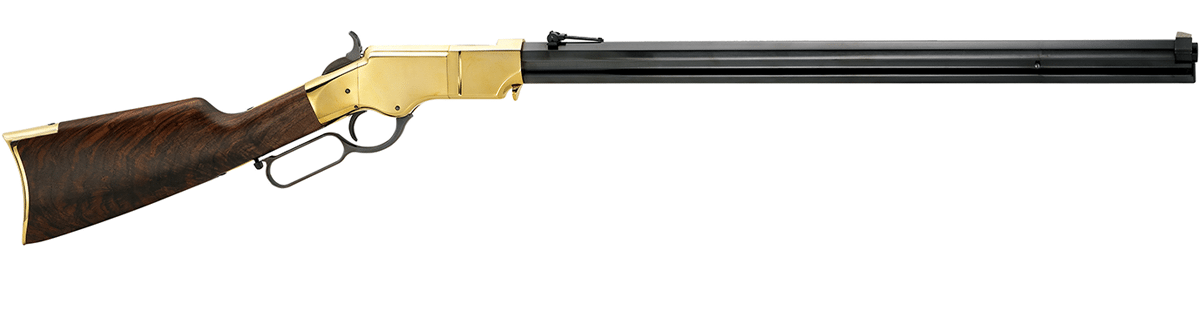
Here's a rifle that I've been thinking about adding to my collection. My next piece is going to be a historical rifle, and this rifle is one of the finalists.


Can anyone name it? Here's your hint: In the Civil War, it was referred to by the Rebels as "that damned Yankee rifle that they load on Sunday and shoot all week". Give up? The answer is below the jump.

Wednesday, February 26, 2014

Frank Underwood, Faulkner, and the South

Good conversation over at Brad's place about House of Cards, the South, and Faulkner. My thoughts are down in a comment from his original post, so you'll have to go over there to read them.


If you're a southerner, your history is something you grapple with.

Monday, September 16, 2013

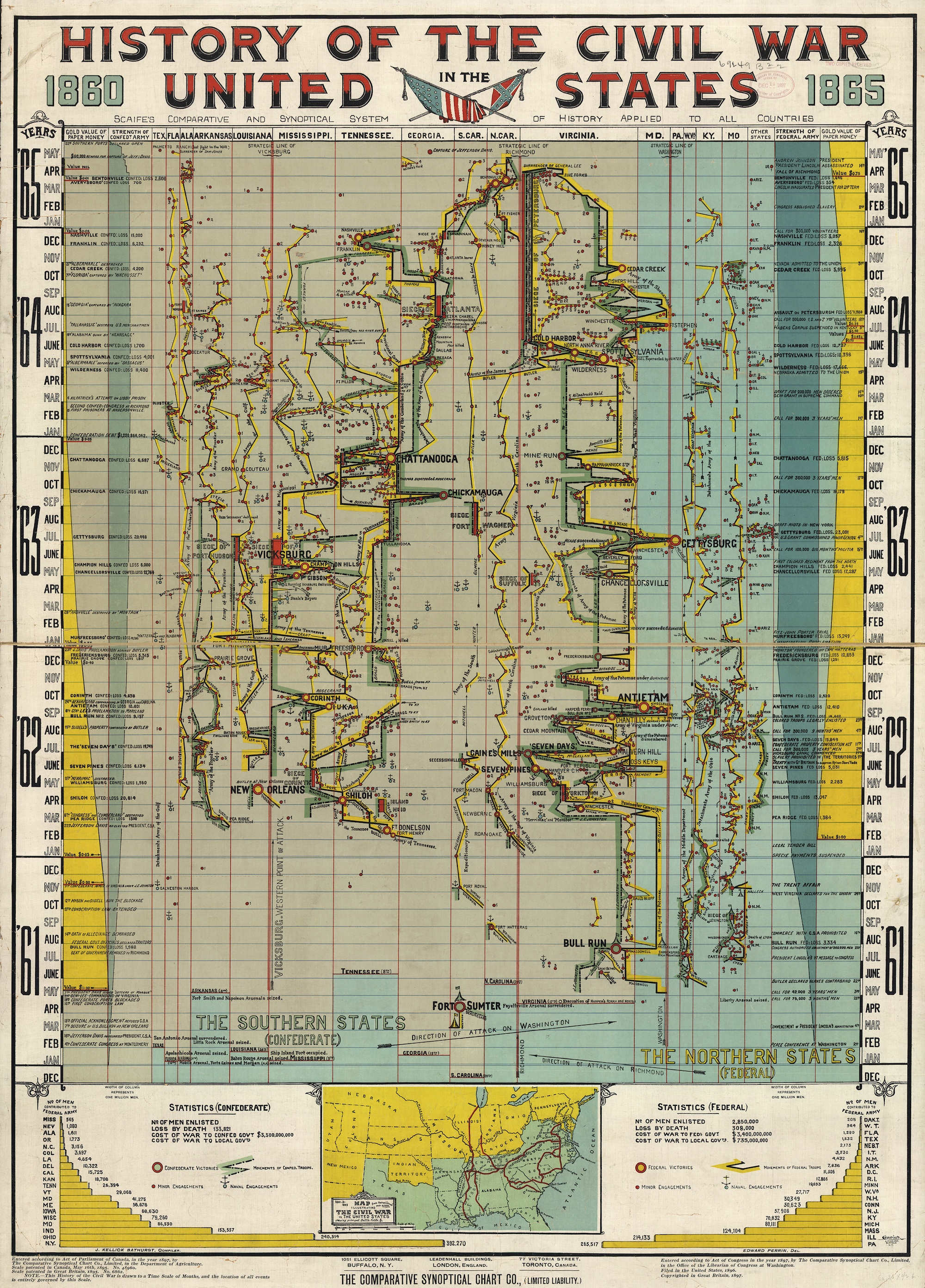
The Civil War in One Chart

Happy Monday. There's road construction on Gervais. Awesome....

I have a pretty good handle on the Civil War, but I don't get this chart at all. It confuses me more than it explains things.

Does anyone "get" this kind of chart?

Tuesday, August 27, 2013

US Intervention in Syria: Why?

Apparently, our Nobel Peace Prize-Winning President is seriously considering sending military assets into Syria because...we'll I'm not sure way. On one hand we have a  oppressive tyrant who has committed atrocity after atrocity in the pursuit of keeping the country under his thumb. Not really a guy that we like.

On the other hand, we have a force of rebels led by jihadist elements of Al-Queda who are bent on establishing an Islamic based state. These guys aren't exactly who you want to bring home to mama, either.

So they're killing each other in a civil war of sorts. So far, about 100,000 people have been killed. Most recently, the tyrant has used chemical weapon on the rebels, killing a thousand or so. What to do?

When the US (or any country) is making the decision to intervene and bomb (kill people), there needs to be a solid reason why. Killing people is....a big decision, you know? We should be able to answer one of these two questions before taking military action:

1. The use of force is absolutely morally justified in order to protect ourselves, in that we have to do so because it's directly in our interest not to be a victim of an attack. (Self Defense)

2. The use of force is absolutely morally justified in order to protect another group, in that we would not be able to live with ourselves in being a bystander, while another group is harmed. (Defense of others)
Ideally, there should be a mix of the two. In the case of Syria, it's pretty clear that #1 doesn't apply. We're not being attacked, and we're not in any imminent danger of being attacked. It's a civil war in a country between jihadist elements and a secular dictator. Neither one of these groups likes us, and neither one of these groups is sympathetic. Why should we bomb either side? If we do, what's our goal? Is it to level the playing field? Is it to decapitate the regime? Is it to stop the use of chemical weapons, but allow normal killing to continue? Is there a moral difference between killing someone with chemical weapons and shooting them with an AK-47? Either way you're just as dead.

I know it's not a popular philosophy in foreign policy, but the doctrine of "Meh, shit happens..." shouldn't be overlooked here. I know that comes across as isolationist, but there has to be an event somewhere in the world that falls under the category of "Not our problem".

I think Syria qualifies as such.

Friday, December 9, 2011

New Book on My Nightstand (Legal Cases of the Civil War)

I actually was loaned this book from a local judge who was kind enough to share it. It's interesting from a historical perspective (leaving aside the legal aspect). The book focuses on the Supreme Court during the years of our Civil War. It's one area of history that I previously hadn't even really thought about. However, the more I think about it, the more interesting it seems. (Yeah, nerd-alert, I know...)

Can you imagine what it was like for a Supreme Court Justice from Georgia to continue to serve, all while the civil war was ongoing?

I'll have a full report when I finish.

Thursday, July 21, 2011

150th Anniversary of The Battle of Manassas

You may be more familiar with this battle as the "Battle of Bull Run". The reason for the different names is that during the war, the North generally named a battle after the closest river, stream or creek and the South tended to name battles after towns or railroad junctions. Hence the Confederate named this battle after Manassas Junction and the Union named this battle after the nearby stream of Bull Run.

Additionally, this battle was the famous moment when General Thomas J. Jackson's brigade arrived late in the afternoon and reinforced the Confederate flank just at the right instant. As the Third Brigade of the Confederates (led by South Carolinian General Bee) was falling back, General Bee famously shouted to his men:
Here is Jackson standing like a stone wall. Let us determine to die here, and we will conquer. Rally behind the Virginians!
The Confederate forces then regrouped, and routed the Union forces from the field. Thereafter, General Jackson was known by his famous nom de guerre of "Stonewall" Jackson.

One Hundred and Fifty years ago, today.