Showing posts with label lessons from history. Show all posts

Sunday, December 21, 2014

The Fog of War

In the second volume of his history of the Civil War, Foote described the fog of war through an episcopal clergyman in New York described the many reports that came in about the Battle of Chancellorsville:
"It would seem that Hooker has beaten Lee and that Lee has beaten Hooker, that we have taken Fredericksburg, and that the rebels have taken it also, that we have 4,500 prisoners, and the rebels 5,400, that Hooker has cutoff Lee's retreat, and Lee has cutoff Sedgewick's retreat, and Sedgewick has cutoff everybody's retreat generally, but has retreated himself, although his retreat was cutoff.

In short, all is utter confusion. Everything seems to be everywhere, and everybody all over, and there is no giving it any truth."
Thus, the second attempt to capture Fredericksburg ended in a Federal defeat, albeit a dearly bought one.

Friday, December 5, 2014

Our National Strife

I have just made it through Vol. I of Shelby Foote's Civil War - A Narrative, and it's absolutely captivating. Foote is a remarkable storyteller. I've always enjoyed history because, to me, good history just reads like a story, and most of the time the truth is more dramatic than fiction. Towards the end of the first volume (which is just about the winter of 1862), a passage struck me. 

Foote recounts a speech that Lincoln delivers to Congress in 1862, just as it had become clear to him (and others) that the Civil War was not going to be easily or quickly won.
Our national strife springs not from our permanent part, not from the land we inhabit, not from our national homestead. Our strife pertains to ourselves, to the passing generations of men, and it can without convulsion, be hushed forever with the passing of one generation.
                                                                                -Lincoln's Second Annual Address

To me, the idea that our national problems can be solved with a new generation  has an optimistic sound. Essentially, we may have troubles now, but the future generations of Americans can solve them simply by coming into existence. I guess it's a faith in the moral arc of the universe. The flip side to that coin is that it only takes one generation to lose what we presently have.

I guess the both are true. Anyway, it seemed particularly relevant to all of the national strife that we seem to have today.

Tuesday, November 11, 2014

Veterans Day: 2014

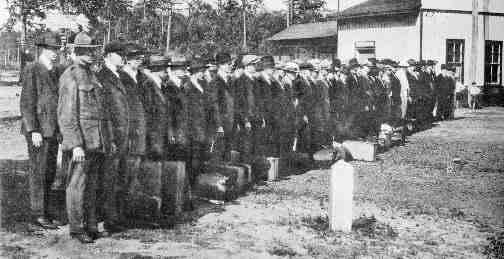
Parris Island Marine Corps Recruits, WWI

Today, we remember all our veterans, but to me, this day seems mostly about remembering the veterans of The Great War.
“The muffled tongue of Big Ben tolled nine by the clock as the cortege left the palace, but on history's clock it was sunset, and the sun of the old world was setting in a dying blaze of splendor never to be seen again.”
― Barbara W. Tuchman, The Guns of August

Thursday, November 6, 2014

Abraham Lincoln's Advice to Lawyers

"Discourage litigation. Persuade your neighbors to compromise whenever you can. As a peacemaker the lawyer has superior opportunity of being a good man. There will still be business enough."

-Abraham Lincoln

Wednesday, November 5, 2014

Last Night's Election - The Devil's Own Day


Nikki Haley cruised to a fairly easy victory last night, as Republicans swept pretty much every race there was, in both South Carolina and nationwide. Even the state of Maryland elected a Republican Governor. Maryland, y'all.

Anyway, we'll see how things go for the next two years. My only admonition to Republicans in the Senate is this: All glory is fleeting. Remember the hubris of the Democrats, who basically thought the were going to have a permanent majority?

Well guess what, y'all. No majority is ever permanent. Get things done, and you'll be rewarded. Act like knuckle-heads, and you'll be out on your ear next time. Being marginally better than the Democrats isn't something to get all that excited about. There's always another battle to be fought.

I'm reminded of the exchange between Grant and Sherman at Shiloh. After the first day of battle, the Confederates had taken the Federal position and forced a retreat of the Federals under Grant and Sherman. The Federals had been driven from the field and looked like they would be finished off the following morning.
When Sherman arrived at Grant's headquarters later that evening, he found the general–broken sword and all– chewing on a soggy cigar in the rain, which had begun soaking the battlefield.

'Well, Grant' Sherman said to his friend, 'We've had the devil's own day, haven't we?'

'Yes,' replied Grant, 'lick 'em tomorrow, though.'
The GOP could easily be licked next time.

Wednesday, September 24, 2014

"We Must Declare War Upon War"

Said President Obama at the UN, today. That's an actual quote. He actually said that. Really.


My reaction to declaring "war on war".

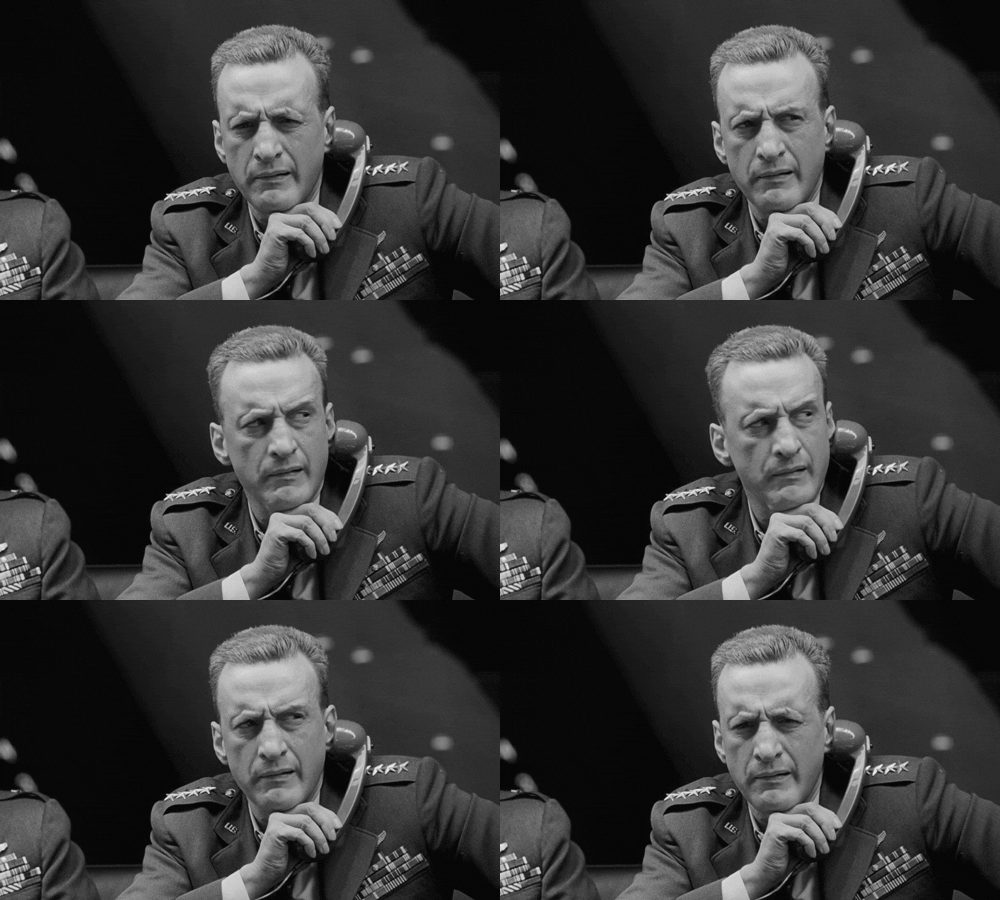
First of all, that's just a weird construction. War on war? Huh? That sounds like something out of Dr. Strangelove.

As to the substance, it's a naive and silly idea to try and declare war on war because you're never going to win the War on War.

There are always going to be aggressive nations/groups who ultimately decide to use force of arms against others. This will always be the case. To try and "end war" is like trying to "end sadness". It ain't gonna happen.

The problem is that in almost all things, President Obama sees the world as he wants to see it, and not how it actually is.

Thursday, September 11, 2014

13th Anniversary of 9/11 - On the Cusp of War Again


Some iconic photos from that day.

On the thirteenth anniversary of the attacks of 9/11, we are now poised to go back to the middle-east to begin fighting a new enemy, but for the old reasons.

Let us pray that our civilian and military leaders have the courage and wisdom to do what is right, even if that means making hard decisions. Very often, the right decisions involve taking a more difficult path. Let us not be fooled into thinking that we can wage a bloodless war against a jihadist army.

War is hard. War is ugly. We should confront the reality of war squarely. I am afraid that many Americans are taking a view of this upcoming battle with ISIS like many Americans viewed the Civil War at its outset. I am worried that people are thinking this will all be over in a few months with minimal casualties.

History warns us otherwise. Yet we should not shrink from what is necessary.

Friday, June 13, 2014

Thoughts on the Disaster That We Call Iraq

Happy Friday.

After work tonight I'm going to Conquest Brewing to sample some beer and some local BBQ from Yellow Dog BBQ. I'll have a review/recap of that over at Fig this weekend. By the way, the folks at Fig have been really nice to me, and they have a great little thing going. If you're a Columbia person, consider checking out Fig every once in awhile...but I digress. My (mostly depressing) thoughts on Iraq are below the jump.

Wednesday, April 30, 2014

The Caskey Doctrine

In case you missed it, Obama said the Obama Doctrine was too long to explain...whatever the heck that means. I think it means he doesn't really have a plan.

Anyway, I put in my two cents over at Brad's Bar and Grille on what I thought isolationism is a bad idea. Since not everyone looks at everything on the internet, I'm re-posting it again here.

China is looking at two American allies (the Philippines and Japan) that are essentially defended by America and America’s nuclear umbrella. And now, whether or not we defend them from Chinese aggression is an open question. That’s bad – and I’ll tell you why.

Once American allies believe that our defense guarantees are a hollow gesture, they will begin to develop and secure their own defenses, and we have been taking that for granted for a long time. For instance, Europe has no defense capabilities to speak of. That’s not going to happen in perpetuity.

If the US ends up abdicating its role as the guarantor of the NATO alliance and our allies such as Japan and the Philippines, then we will be leaving space for these individual nations to develop their own forces out of necessity.

Essentially, the different nations will begin to balance against each other. That balancing will be self-perpetuating. As each nation grows its military, another nation will be forced to do the same. Japan will have to balance against China. The Baltic States will have to balance against Russia. Rinse, lather, repeat. It will grow and grow. Then we will have what will essentially be a multi-polar world in terms of military power – like in the 1920s and 1930s.

That’s bad. All of these balancing forces act in relation to each other in ways that are unpredictable. And that ultimately leads to a military confrontation, which can then catch fire.

And even if America abdicates its leadership role as the guarantor, we will still be the hegemon (lead country). We’ll be the hegemon for at least the next 50-80 years or so regardless of what we do or don't do. So, we’ll be drawn into one (or more) of these conflicts.

Accordingly, it’s in the interest of the USA to ensure that there is no conflict between two nations. Because we’ll be almost assuredly drawn in to any conflict between any European nations, Japan, China, or otherwise.

Aside from the military aspect, we want to maintain a world economic and trade system that is maintained and secured by military force if need be. But it’s much harder to secure the world’s trade if you have many, different, competing poles of power, seeking to create little places of their protection for trade. China just did this recently.

Eventually, transit such as shipping lanes and air corridors could be closed. And that leads to miscalculation by other nations…which leads to war…which we want to avoid.

That’s why we want to “get out in front” of this sort of thing. We don’t want to allow bigger, broader conflicts to come up.

The problem with isolationists who advocate “staying out of it” in certain areas of the world is that they don’t realize that “staying out of it” isn’t a permanent decision. Sooner or later, the US will be involved.

The only question is do we want to be involved up front, with minimal conflict, or do we want to wait to get dragged into a shooting war between nation states later?

That’s the Caskey Doctrine, anyway. (For whatever it’s worth.)

Saturday, March 1, 2014

My Thoughts on Russia's Invasion of Ukraine

I am not a fan of President Obama, but it gives me no pleasure to see him embarrassed on the international stage. He represents me. He represents the entire country.

Russia has invaded Ukraine. That's a fact. Does Putin give a rip about the speeches given in the West? No. He's going to respond with a version of Stalin's line of "How many divisions do you have"? 

Russian leaders, through time immemorial, respect strength and exploit weakness.

Does this bode well for the American hegemony that has dominated the globe for the last 70 years? No. Does this help the people of Taiwan, Tel Aviv, and Poland sleep better at night? No.

You don't think China is watching? Maduro in Venezuela? Khamenei in Iran? Even if you don't care much about the Crimea, it is much bigger than that. Our President says that he isn't looking at the world like a Cold War chessboard. I would say that this is chess and he's not seeing the whole board.

Deterrence works only on a track record. Every time you don't act, you invite the next, bigger crisis. Sitting idle and grumbling (as you say) is a mistake. It would constitute a signal to Putin that he would welcome. Even if you do not agree that free nations must defend other nations as a moral obligation, it is a practical one. Dictators always expand. This is a strongman claiming to "protect" those in another country with a similar culture. I think I've seen this movie before.

So let's say you don't want to go military, Fine. What could we do? Russia's economy depends on high natural gas prices. Economics works here. Europe should start fracking, and US should increase natural gas exports. Price falls. Also, all of Russia's natural gas pipelines go through Ukraine. Anyone ever seen Lawrence of Arabia? BOOM. Russia has less money for foreign adventures.

Monday, December 16, 2013

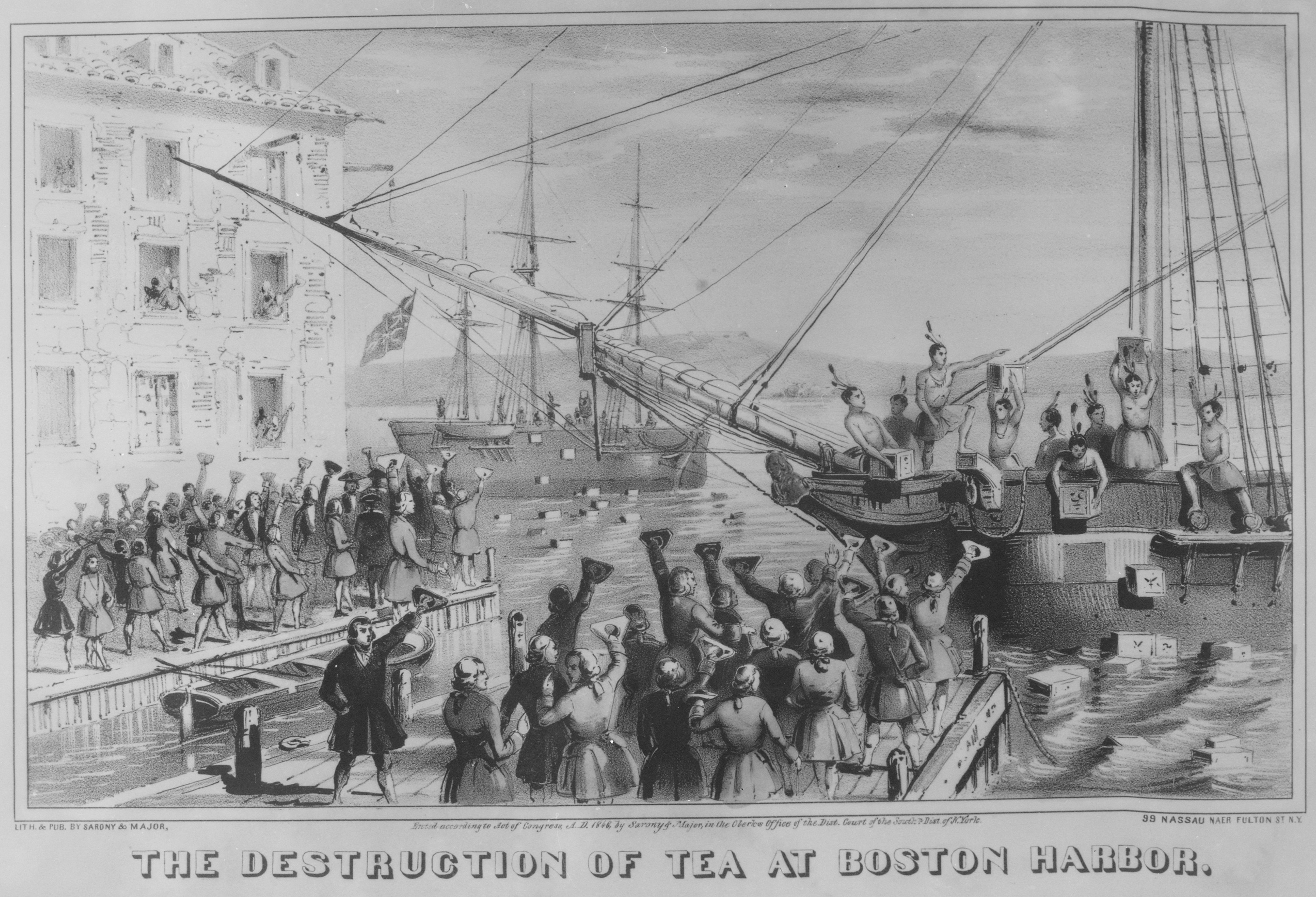
240th Anniversary of the Boston Tea Party


I couldn't let today go by without mentioning that it's the 240th anniversary of the Boston Tea Party. Maybe it was an act of lawlessness, but it was certainly a turning point in the relationship between the colonists and the British government.

What would our government have to do to provoke a similar response now?

Monday, October 21, 2013

What Books Should You Be Reading?

Happy Monday, y'all.

I was looking at my bookshelves this weekend and trying to decide how to best organize them. My house doesn't really have a great amount of bookshelves relative to the amount of books I've accumulated, so space is at a premium.

I'm pretty heavy into non-fiction, while Mrs. Permanent Press enjoys novels. You can pretty much go through our bookshelves with that in mind and figure out which books belong to whom. On Sunday, she and I were discussing which books that should be read in order to be a well-informed citizen to participate in our little constitutional republic as a reasonably informed person. We tried to come up with a top 5 list.

Obviously, there's the Constitution. That's kind of a gimme, like naming The Beatles in a list of top five bands. Barry from High-Fidelity wouldn't like it.

After some thought, here's what I came up with:

Top 5 Books You Should Read to be an Informed American
  1. Democracy in America
  2. The Federalist Papers
  3. Capitalism and Freedom
  4.  The Guns of August
  5. American Rifle
Democracy in America made the list as it is an outsider's view of America shortly after the revolution. The Federalist Papers made the list because they are probably the best "companion" to the Constitution that you could have. On economic matters, I wanted to include a work from Milton Friedman, hence Capitalism and Freedom. I liked it, but your mileage may vary. The Guns of August is in the list as a cautionary tale of how countries plunge into war. I thought about including a book on the Civil War and/or WWII, but I wanted to stick with my limit of five. Finally, I put American Rifle in on the list because the development of the rifle through our history had a profound impact on our country. Again, your mileage may vary.


Anyway, it's impossible to come up with a perfect list if you're held to only five books, but it's fun to try. Anybody think they can come up with a better list?

Tuesday, August 6, 2013

68th Anniversary of Hiroshima Bombing

Sixty-eight years ago, the Enola Gay dropped "Little Boy" on Hiroshima Japan in the first ever use of a nuclear device in warfare. Here's how the New York Times covered it the next day:


With the hindsight of history, many people have argued over whether using nuclear weapons was necessary. If you want to argue that it wasn't necessary, it's important to remember the historical context in which the bomb was dropped. An Allied invasion of Japan was expected to be extremely costly. I know that every soldier, sailor, and airman who didn't have to invade Japan was happy that the US decided to use the atomic bomb.

All I have to say about dropping nuclear bombs on Japan:

Mess with the bull, get the horns.

Thursday, May 30, 2013

War on Terror: The Enemy Gets a Vote

Regarding the "War on Terror", Obama recently said:“This war, like all wars, must end. That’s what history advises. That’s what our democracy demands.”

He's right that wars end, but he's not right as to why.

Wars end when both sides stop fighting. Usually that's because one side totally defeats the other. It only takes one side to start a war, and it only takes one side to keep a war going. If people want to pursue certain ends through the aggressive use of force, then they're going to do that until they decide not to. Jonah Goldberg sums this up quite nicely in his piece: Our Enemies Gets a Vote.

Obama can say that the "War on Terror" is over as much as he wants to. He can genuninely wish for it to be over. Heck, I wish that it were over. The only problem with that is that the Islamic radicals get a vote. They get to decide when it's over, and so far, I'm not seeing any signs that they are giving up.

Wars continue until both sides agree to stop. No war in the history of the world has totally ended until both sides agreed that the war was over. Usually, the best way to convince the other side to stop fighting is to destroy their forces. That's the lesson of history.


Tuesday, April 30, 2013

Silent Cal's Six Rules

President Coolidge is an underrated President, but he probably likes it that way. My favorite quote from his six rules is:
“It is a great advantage to a President, and a major source of safety to the country, for him to know that he is not a great man. When a man begins to feel that he is the only one who can lead in this republic, he is guilty of treason to the spirit of our institutions.”

Tuesday, April 23, 2013

This Day in History: New Coke Unveiled

On April 23, 1985, Coca-Cola committed one of the great blunders in marketing: New Coke. Interesting details of the story are here.
To hear some tell it, April 23, 1985, was a day that will live in marketing infamy.

On that day, The Coca-Cola Company took arguably the biggest risk in consumer goods history, announcing that it was changing the formula for the world's most popular soft drink, and spawning consumer angst the likes of which no business has ever seen.
Pretty much the same thing happened with Maker's Mark a few months ago. Apparently, people don't like it when you mess with their drinks. I wonder how a New Coke and re-formulated Maker's Mark bourbon would taste. (shudders)

Tuesday, January 8, 2013

Today in WWII (Stalingrad)

January 8, 1943: The Red Army has the Germans army encircled near Stalingrad. The Soviets offer the Germans "Gingerbread or the whip". Who knows if the Soviets would have actually lived up to their offer? They were notoriously hard on prisoners.

In my opinion, Germany's decision to change focus and start bombing British cities rather than to continue to focus on the aerodromes (the Battle of Britain) and the ill-advised German push to Stalingrad were two of the major turning points in the war.

Thursday, January 3, 2013

Unheeded Advice from George Washington

Here's an admonition in George Washington's Farewell Address that everyone seems to have forgotten:
As a very important source of strength and security, cherish public credit. One method of preserving it is to use it as sparingly as possible, avoiding occasions of expense by cultivating peace, but remembering also that timely disbursements to prepare for danger frequently prevent much greater disbursements to repel it, avoiding likewise the accumulation of debt, not only by shunning occasions of expense, but by vigorous exertion in time of peace to discharge the debts which unavoidable wars may have occasioned, not ungenerously throwing upon posterity the burden which we ourselves ought to bear.
Looks like we missed the boat on that one. Sorry, George.